
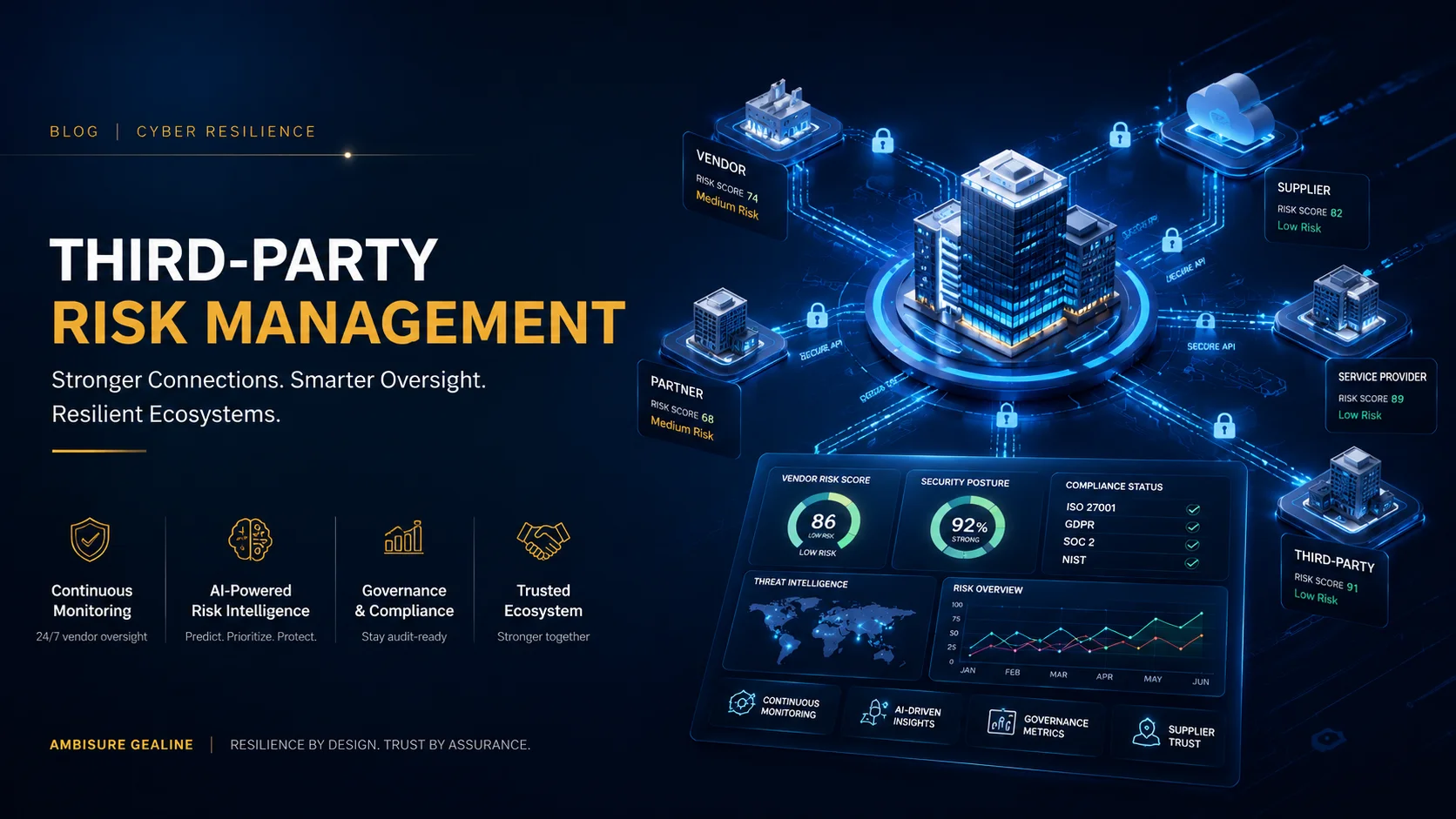
In today’s highly connected digital economy, Third-Party Risk Management has become a critical business function for organizations of all sizes. Businesses increasingly depend on vendors, suppliers, cloud service providers, software vendors, consultants, and outsourcing partners to improve efficiency and accelerate growth. While these relationships create opportunities, they also introduce significant cybersecurity, compliance, operational, and financial risks. A security weakness within a third party can quickly become a serious threat to your organization, making Third-Party Risk Management an essential component of modern enterprise risk management.
Organizations are no longer evaluated solely on their own security posture. Regulators, customers, and stakeholders expect businesses to ensure that every vendor handling sensitive information or supporting critical operations follows the same high standards of security and compliance. Implementing a comprehensive Third-Party Risk Management program enables businesses to identify vulnerabilities early, reduce potential disruptions, and maintain trust in an increasingly complex business ecosystem.
What Is Third-Party Risk Management?
Third-Party Risk Management (TPRM) is the continuous process of identifying, assessing, monitoring, and mitigating risks associated with external vendors and service providers throughout the entire vendor lifecycle. The objective is to ensure that every third party meets the organization’s cybersecurity, compliance, privacy, operational, and business continuity requirements before gaining access to business systems or sensitive information.
Rather than treating vendor assessments as a one-time exercise during procurement, organizations should continuously evaluate vendor performance, security controls, regulatory compliance, and operational resilience. Continuous monitoring allows businesses to identify new risks as vendor environments evolve and respond proactively before issues escalate into costly incidents.
A mature Third-Party Risk Management program provides organizations with greater visibility into vendor risks, enabling informed decision-making while protecting critical business assets.
Why Third-Party Risk Management Is More Important Than Ever
Digital transformation has significantly increased the number of third-party relationships within organizations. Businesses rely on cloud platforms, Software-as-a-Service (SaaS) applications, managed IT providers, payment processors, logistics companies, and professional consultants to support daily operations. Every external partner with access to business systems or confidential information expands the organization’s attack surface.
Recent cybersecurity incidents have demonstrated that attackers often target suppliers and service providers as an easier path into larger organizations. A vendor with weak cybersecurity controls can unintentionally expose confidential customer data, financial records, intellectual property, or operational systems. These incidents frequently result in financial losses, regulatory penalties, legal challenges, and reputational damage.
Third-Party Risk Management helps organizations minimize these risks by evaluating vendor security practices before onboarding and continuously monitoring them throughout the business relationship.
Common Risks Associated with Third Parties
Cybersecurity remains one of the most significant concerns in Third-Party Risk Management. Vendors often process confidential information, connect directly to internal systems, or host critical applications. Without strong security controls, businesses become vulnerable to ransomware attacks, phishing campaigns, credential theft, malware infections, and unauthorized access to sensitive data.
Regulatory compliance also presents substantial challenges. Organizations operating in industries such as healthcare, financial services, manufacturing, retail, and technology must ensure that vendors comply with frameworks including ISO 27001, SOC 2, GDPR, HIPAA, PCI DSS, and the NIST Cybersecurity Framework. Regulatory authorities increasingly hold organizations accountable for the actions of their third-party providers, making vendor due diligence an essential compliance requirement.
Operational risks are equally important. Organizations depend on vendors for essential services ranging from cloud infrastructure and payroll processing to logistics and software development. If a supplier experiences service disruptions, financial instability, or disaster recovery failures, business operations can be severely impacted. Third-Party Risk Management enables organizations to identify these risks early and develop effective mitigation strategies.
Financial and reputational risks should not be overlooked. Vendor bankruptcy, contractual disputes, or public security incidents can interrupt business operations and erode customer confidence. By evaluating vendor financial health and governance practices, organizations can make better-informed procurement decisions while protecting long-term business stability.
The Third-Party Risk Management Lifecycle
An effective Third-Party Risk Management program begins with identifying and classifying vendors according to the level of access they have to sensitive information and business-critical systems. High-risk vendors require more extensive assessments than those providing low-risk services.
Following vendor identification, organizations conduct detailed due diligence to evaluate cybersecurity controls, privacy practices, regulatory compliance, financial stability, business continuity capabilities, and incident response preparedness. Security questionnaires, independent certifications, penetration testing results, and compliance reports provide valuable insights into the vendor’s overall risk profile.
Once risks have been identified, organizations implement appropriate mitigation measures through contractual obligations, access restrictions, remediation plans, and ongoing oversight. However, vendor risk management does not end after onboarding. Continuous monitoring allows organizations to detect changes in vendor security posture, compliance status, or operational performance, ensuring that emerging risks are addressed promptly throughout the relationship.
Benefits of Implementing Third-Party Risk Management
Organizations that invest in Third-Party Risk Management gain a significant competitive advantage by strengthening cybersecurity, improving regulatory compliance, and enhancing operational resilience. A well-structured program reduces the likelihood of third-party data breaches, minimizes business interruptions, and improves overall governance.
Continuous vendor monitoring also enables organizations to identify emerging threats before they impact critical business functions. Better visibility into vendor performance supports informed procurement decisions, strengthens customer confidence, and demonstrates a proactive commitment to risk management.
As businesses increasingly adopt cloud technologies and digital supply chains, Third-Party Risk Management has become a strategic business function that protects long-term growth while supporting innovation.
Best Practices for Building an Effective Third-Party Risk Management Program
Successful Third-Party Risk Management requires a structured governance framework supported by executive leadership and cross-functional collaboration. Organizations should maintain a comprehensive inventory of all vendors, classify them according to risk, and perform standardized security assessments before onboarding new suppliers.
Vendor contracts should clearly define cybersecurity expectations, compliance obligations, data protection requirements, incident notification procedures, and audit rights. Regular reassessments ensure vendors continue to meet organizational standards as regulations and cyber threats evolve.
Leveraging automation through Third-Party Risk Management platforms significantly improves efficiency by simplifying vendor questionnaires, risk scoring, compliance tracking, reporting, and continuous monitoring. Automation enables organizations to manage large vendor ecosystems while maintaining consistent oversight and reducing manual effort.
Why Choose Ambisure for Third-Party Risk Management?
At Ambisure, we help organizations develop comprehensive Third-Party Risk Management programs that align with international standards and industry best practices. Our experienced consultants assess vendor risks, perform security and compliance reviews, develop governance frameworks, and implement continuous monitoring strategies that strengthen organizational resilience.
Whether your organization is establishing a new vendor risk management framework or enhancing an existing program, Ambisure provides practical, scalable solutions tailored to your business objectives. Our expertise enables businesses to reduce vendor-related risks, strengthen compliance, and confidently navigate today’s evolving cybersecurity landscape.
Conclusion
Third-Party Risk Management is no longer just a compliance requirement—it is a business necessity. As organizations continue to rely on external vendors for critical services, the ability to identify, assess, and manage vendor risks directly impacts cybersecurity, operational resilience, and long-term business success. A proactive Third-Party Risk Management strategy helps organizations reduce vulnerabilities, improve regulatory compliance, protect sensitive information, and strengthen stakeholder confidence.
Partnering with experienced cybersecurity professionals ensures your vendor risk management program remains effective as threats and regulations evolve. At Ambisure, we are committed to helping organizations build resilient Third-Party Risk Management frameworks that safeguard their operations and support sustainable growth.
What is Third-Party Risk Management?
Third-Party Risk Management is the process of identifying, assessing, monitoring, and mitigating risks associated with vendors, suppliers, contractors, and external service providers that have access to an organization’s systems, data, or operations.
Ready to Strengthen Your Third-Party Risk Management Strategy?
Protect your organization from vendor-related cyber threats, compliance risks, and operational disruptions with Ambisure’s expert Third-Party Risk Management services. Our specialists help businesses assess vendor security, implement effective risk management frameworks, and achieve long-term resilience.
Contact Ambisure today to schedule a consultation and discover how our Third-Party Risk Management solutions can help your organization reduce risk, ensure compliance, and build a secure digital future.
Threat Intelligence • SOC Services • VAPT • Cloud Security • Endpoint Protection • Compliance •Incident Response
